
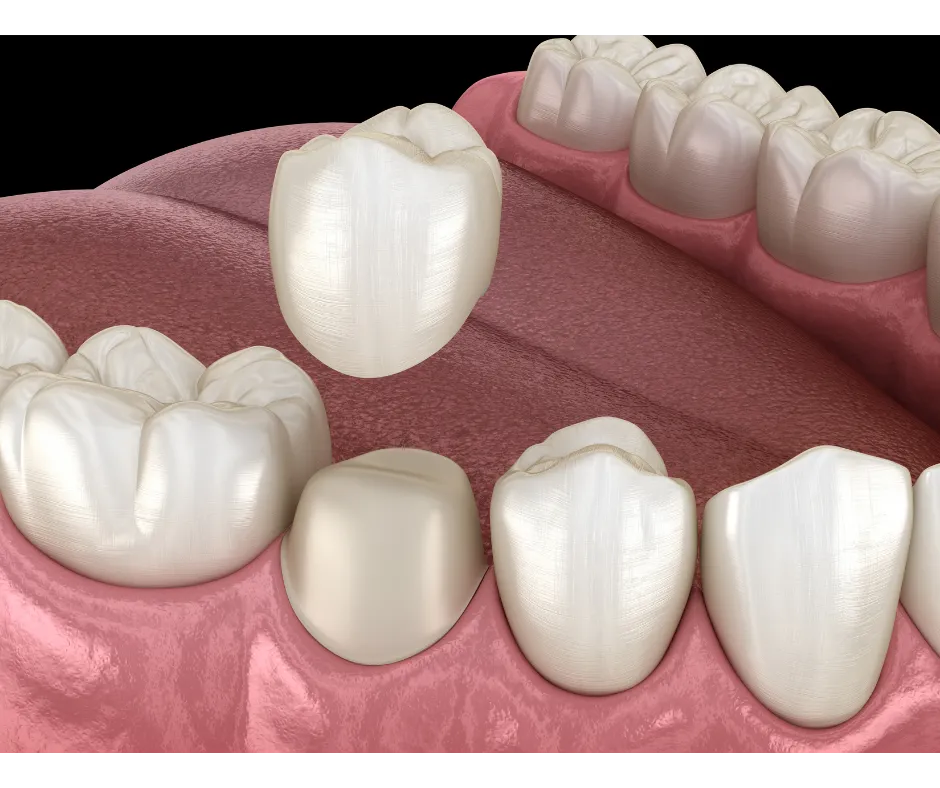
Treat the crown like a natural tooth
A crown covers your tooth, but the natural tooth underneath is still alive and still needs the same care. Decay can form at the margin where the crown meets the gumline, and if it does, the crown often has to come off to fix it.
Brush twice daily with a soft-bristle brush and fluoride toothpaste. Floss once a day, paying attention to the margin around the crown. An electric brush isn't required, but many patients with crowns find them easier to use thoroughly.
Flossing around a crown
Floss every day, but be careful pulling the floss back out. Yanking up can occasionally catch the crown edge, instead, gently pull the floss out sideways through the gap between teeth. Water flossers are an excellent alternative around crowns, bridges, and implants. They flush bacteria from below the gumline without any snagging risk.
What to avoid
A few habits dramatically increase the chance of damaging a crown:
- Chewing ice, hard candy, or popcorn kernels
- Using your teeth to open packaging or hold tools
- Grinding or clenching at night without a nightguard
- Sticky candies (taffy, caramel) that can pull a crown loose
- Skipping dental visits, small issues at the margin grow quickly
Get a nightguard if you grind
Bruxism (grinding) is the single biggest reason crowns fail prematurely. The repeated force fractures porcelain over time and can dislodge the crown entirely. If you wake up with sore jaws or a partner has told you you grind, talk to us about a custom-fit nightguard, typically two visits and lasts three to five years.
Routine checkups still matter
Six-month cleanings and exams aren't optional once you have a crown, they're more important. We check the margin for early decay, monitor the gum around the crown for inflammation, and X-ray every few years to verify the bone level is stable. Catching a problem at this stage usually means a small fix; missing it usually means a bigger one.
When to call about your crown
Most crowns last 10 to 15+ years without any issues. A few situations are worth a quick phone call rather than waiting for your next cleaning:
Lingering sensitivity to hot or cold past a few weeks (could indicate nerve irritation under the crown). A change in your bite, the crown feeling higher or lower than before, which can cause TMJ-style jaw fatigue. Visible darkening along the gum line where the crown meets the tooth (usually a margin issue we can re-seal). And of course any feeling that the crown is loose or rotates, that's an emergency-ish situation worth same-day attention because a loose crown can be lost or cause decay underneath.
Questions about your specific case?
Every patient's mouth is different. The article above covers the general principles, for a personalized recommendation, schedule a consultation with Dr. Sidhu.