
The most natural way to replace a missing tooth
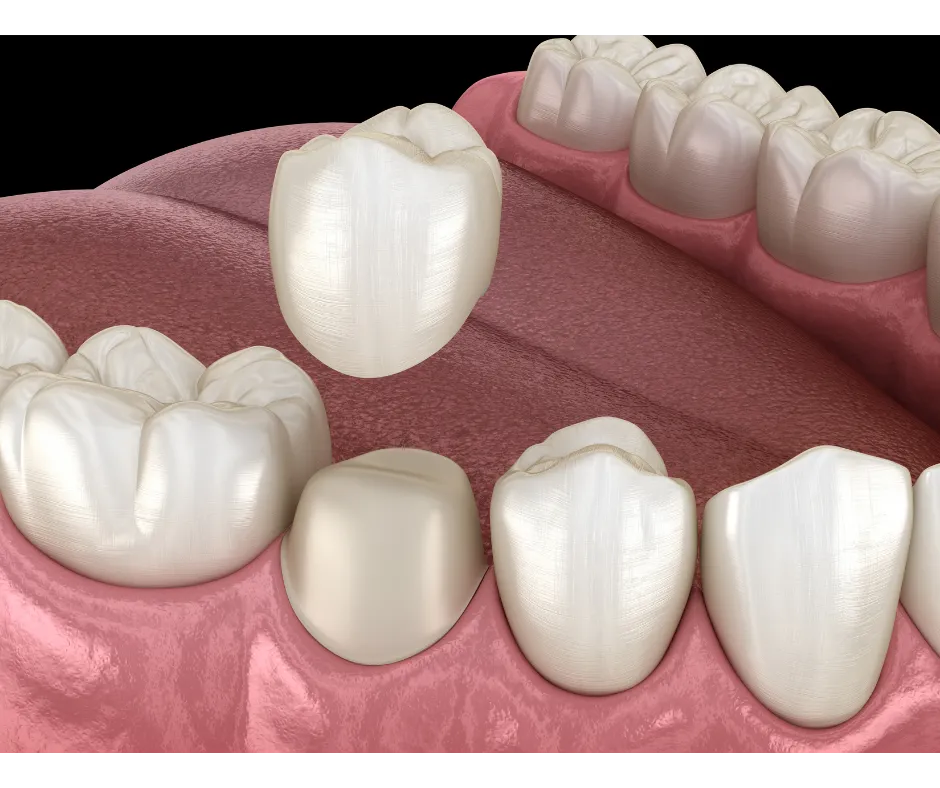
An implant is a small titanium post that takes the place of a missing tooth root. Once it integrates with your bone, a process called osseointegration that takes 3-6 months, we restore it with a custom crown that looks, feels, and chews like a natural tooth. No reshaping the neighboring teeth (like a bridge requires), and no removable appliance (like a denture).
How the timeline actually works
Step one is planning: we take 3D scans, evaluate bone health, and design the position digitally before any surgery. Step two is placement, performed by a trusted local oral surgeon when needed. Step three is integration, 3-6 months of healing during which we may place a temporary tooth. Step four is the final crown, designed and seated by Dr. Sidhu in our office.
Replacing multiple teeth or full arches
Implants aren't just for single teeth. Two implants can support a bridge replacing several teeth, and four to six implants can support a full-arch fixed bridge or stabilize a denture so it never slips. We'll evaluate which approach fits your bone, budget, and goals.
Implants compared to bridges and dentures
Implants are the modern gold standard for replacing missing teeth, but they're not always the only good option. A traditional bridge anchors a replacement tooth to neighboring teeth, faster, no surgery, but requires grinding down two adjacent (often healthy) teeth as anchors. A partial denture is least invasive and most affordable, but it's removable and less stable than a fixed option. Implant-supported full dentures (All-on-4) are a middle path for patients with multiple missing teeth, snapping permanently onto 4-6 implants per arch.
Dr. Sidhu walks through each option's pros, cons, and total cost at the consultation. There's no upsell to implants, sometimes a bridge or partial is genuinely the better fit for a patient's situation.
Are implants right for everyone?
Most healthy adults are good implant candidates. A few situations warrant caution or a slower approach: uncontrolled diabetes (A1C above 8.0) slows healing and raises infection risk; heavy smoking compromises integration, we strongly recommend a quit plan before placement; recent IV bisphosphonate therapy for osteoporosis or cancer carries a small risk of osteonecrosis; pregnancy generally means waiting until after delivery; insufficient bone volume may require a graft or sinus lift first.
These aren't disqualifications, they're conversations we have at the consultation so we can plan around them rather than discover them mid-treatment.
What to expect, step by step
Here's exactly what happens at a dental implants appointment at Cusp Dental, from the moment you walk in to the followup.
-
3D imaging and planning
A cone-beam CT scan gives Dr. Sidhu a precise 3D view of bone width, height, and the relationship to important anatomy (nerves, sinuses). We plan the exact implant position digitally before any surgery.
-
Implant placement
The implant is placed under local anesthesia (with optional sedation). The procedure is typically 60-90 minutes for a single implant. Most patients describe it as less uncomfortable than an extraction.
-
Healing (osseointegration)
Over 3-4 months, the bone grows around and onto the implant surface, anchoring it permanently. A temporary tooth or denture covers the area during this time so you're never without a smile.
-
Abutment placement
Once integrated, a small connector (abutment) is attached to the implant. This is a quick 15-minute visit, often without numbing.
-
Final crown delivery
A custom crown is fabricated to match your neighboring teeth in shape and shade, then bonded or screwed onto the abutment. The new tooth feels and functions like a natural tooth.
Pricing & insurance
We don't post per-service pricing here because every case is different. Call us at (916) 451-4856 for a personalized estimate. We verify your insurance benefits at no charge and give you a written all-in estimate before any treatment begins.
- Insurance
- Most PPO plans cover implant restorations partially, typically 50% of the crown portion. The implant itself is covered less consistently. We submit pre-authorization for every implant case.
- Financing
- CareCredit financing with 0% APR options for plans over $1,000, or Cherry for fixed monthly payments without a hard credit check. We also handle staged billing across implant placement and restoration.
Bone grafts ($400-$800), sinus lifts ($1,500-$2,500), and IV sedation are billed separately when needed. Full-arch options (All-on-4) run $20,000-$28,000 per arch. We give a written all-in estimate before any treatment begins.
Common questions about dental implants
Am I a candidate for an implant?
Most adults with healthy gums and enough jawbone are good candidates. Smoking, uncontrolled diabetes, and active gum disease can complicate healing. We'll evaluate with a 3D scan and clinical exam, and if bone is thin, bone grafting can sometimes restore the foundation.
Does the surgery hurt?
Most patients are surprised by how comfortable implant placement is. Local anesthetic (and sedation if you'd like) keeps you comfortable. Post-op soreness is typically less than a tooth extraction and resolves within a few days.
How much do implants cost?
A single-tooth implant, surgical placement, abutment, and crown, typically falls in the $4,000-$6,000 range total. Many PPO plans cover a portion. We provide a clear written estimate after planning, and offer financing through CareCredit and Cherry.
How long do implants last?
With good home care and regular checkups, implants commonly last 20 years or more, many last a lifetime. The crown attached to the implant may need replacement after 10-15+ years, similar to any crown.
Ready to book your dental implants appointment?
We're in-network with most major PPO plans, verify your benefits at no cost, and never push treatment you don't need. Call us or book online, same-day visits are usually available.